Gym Class: The Top 10 Most Common Training Mistakes And We Show You How To Fix Them
Get out your workout logbook and tighten up your wrist straps as we count down the 10 most likely derailments of your training progress and explain how to avoid them. Class is in session.
Mistake #10 Cheating Your Gains
Used correctly, cheating can up the intensity of sets, but it’s frequently employed too soon and therefore lessens intensity. Many bodybuilders cheat (i.e., use bad form) throughout a set, and therefore transfer stress away from the targeted muscles. Biceps curls, for example, are often cheated from start to finish by the use of momentum, which shifts the focus off of the bi’s and onto the front delts.
Solutions
- Learn how to do each exercise with the proper form, and then practice until you have this form mastered. Warm-ups and the lighter sets of a pyramid are also like practice rounds to get you into the groove, so you can do your heaviest sets correctly.
- If necessary, take steps to curtail cheating, such as standing against a wall and/or pressing your elbows against your sides during barbell curls or performing side laterals while seated.
- Do not loosen your form until you’ve reached full-rep failure. Cheating should be used to make a set harder (pushing it beyond failure), not easier (preventing you from reaching failure via strict reps).
Photo Credit: Brian Moss
Mistake #9 Going Too Low
The best range for muscle growth is 8-12 reps per set. Consistently doing 7 or fewer reps with heavier weights may feed your pride in the gym, but it won’t build as much muscle as moderate reps with moderate weights. A recent study found that when subjects used a weight that allowed them to complete 25-30 reps per set, they increased muscle protein synthesis (the process that leads to muscle growth) by 60% more than when they did sets with a weight that limited them to 4 reps. What’s more, going too heavy often leads to truncated reps. This is especially true of leg presses. It’s likely you can use more metal with this exercise than any other.
This stokes your ego, and because the guy before you used 900 for six half-reps instead of 600 for 12 full reps, you want to crank out 900-pound partials, too. Resist this urge. More reps and better form with a lighter weight will build more mass.
Research
A recent study from Italy found that when subjects did dumbbell shoulder presses with half-reps or three-quarter reps, they did not use nearly as much deltoid muscle fibers as they did when they did full reps. Using more muscle fibers during an exercise will make that muscle bigger. Even when training for power, the fewer reps you do, the harder it is to eke out another one and thus make consistent gains.
Solutions
- Do movements from full stretches to full contractions. Carefully control the negative half of reps.
- Keep the reps of most sets in the 8-12 range.
- Focus on your muscles contracting, not the weight moving.
Mistake #8 Failing to Fail
Failure is the point in a set when you cannot complete another full rep with good form. Not every working set needs to enter the failure zone, but many bodybuilders fall far short of failing on every set. Often this is because they set a target well within their reach, hit it and quit.
Solutions
- On a failure set, don’t bail out of a strict rep until it has stalled for at least three seconds. Then you can stop, or you can cheat just enough or get just enough assistance to complete the rep.
- Keep a workout log, noting your personal bests in lifts. “Beating the logbook” will give you something to shoot for each workout.
- Don’t set a rep target unless it’s beyond your full-rep comfort zone and, ideally, a personal best.
- Shoot for at least one or two sets taken to failure on every exercise you do.
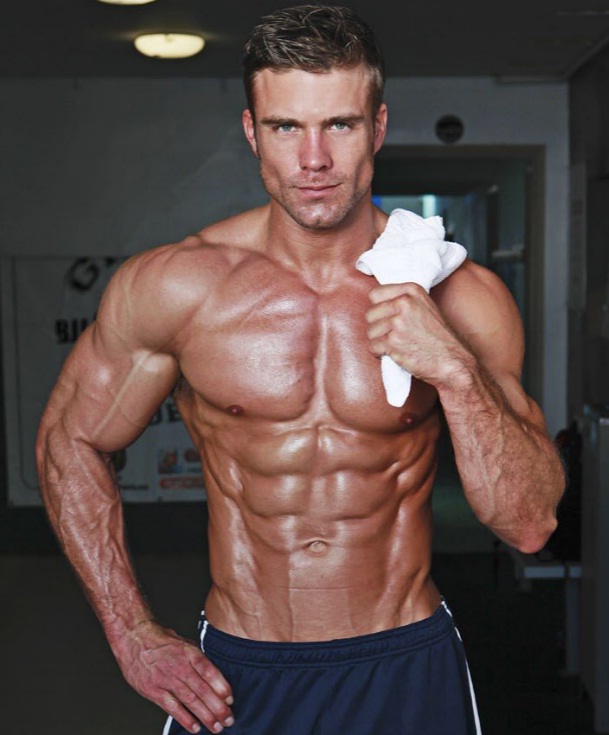
Featured Model: Brad Gouthro
Mistake #7 Machine Love
Most modern gyms have a plethora of machines, but resist the urge to fill the bulk of your routine with mechanical movements. Barbells and dumbbells remain the best bodybuilding tools ever invented, and free-weight or bodyweight exercises should be the cornerstones of your routines for chest, back, arms, shoulders and quads. The best chests of Arnold Schwarzenegger’s era still compare favorably with the 12 pecs in this year’s Mr. Olympia posedown despite all of our modern advantages.
Why? Pecs then were worked almost exclusively via barbell presses, dumbbell flyes and dips.
Solutions
- Do mostly free-weight and bodyweight basics.
- Emphasize compound exercises (those that use more than one bodypart). For example, do dips and close-grip bench presses for triceps, as opposed to all mechanical isolation exercises like pushdowns and machine extensions.
- If you do mechanical lifts, try to choose a unilateral Hammer Strength, FreeMotion or similar machine that approximates the freedom of free weights.
Mistake #6 Insufficient Intensity
There are those who never push sets beyond full-rep failure and thus never truly challenge themselves in the gym, and there are those who have journeyed deep into the pain zone but, over time, their intensity progressively wanes. For the former, there are several techniques for going beyond failure, including forced reps, cheating, partial reps, rest-pause, negative reps, static contractions and descending sets. (Research shows that techniques such as forced reps boost growth hormone levels far higher than workouts in which sets are taken just to muscle failure and not beyond.) For the latter, almost everyone experiences periods of waning intensity.
The mistake is trying to work your way out by doing more of the same. Instead, you need to recharge your physical and mental reserves. To reach your goal in the fastest time, you sometimes need to slow down, or stop and refuel.
Solutions
- Learn the various techniques for pushing your sets beyond failure and apply these to a few sets each workout. Not every technique fits every exercise. For example, you don’t want to cheat squats or do negative-only deadlifts, but a spotter can help you with a couple forced reps on squats and you can rest-pause deadlifts.
- Waning intensity is a warning sign for overtraining. Heed this warning, and cut down on your workout frequency and/or take a week or two away from the gym.
- Cycle higher intensity periods of 8-12 weeks with lower intensity periods of 2-4 weeks. In the latter, break up your normal training style with something fresh, like circuit training, powerlifting or high reps (20-50 per set).
When you’re back on the fast track and trying to push sets to failure and beyond, choose challenging but (barely) attainable short-and long-term strength goals.
Lessons Learned
- Only cheat to extend sets beyond full-rep failure.
- Keep most of your sets in the 8-12 rep range.
- Push some working sets to the point where you fail to complete a full rep on your own with proper form.
- Choose mostly free-weight and bodyweight exercises.
Push some working sets beyond full-rep failure and cycle your training to maintain intensity.
Mistake #5 Too Little Rest
When it comes to overtraining, we prefer to focus on the resting component and not the working component because, for most bodybuilders, the problem is not too much workout volume or intensity. Instead, the culprit negating their gains is almost always insufficient rest between workouts. You need to properly space your gym sessions to make certain you fully recover and grow before hitting the heavy iron again.
Solutions
- Allow at least 72 hours between workouts for most bodyparts (calves and abs, excepted). So if you train triceps on Monday, you can hit them again on Thursday.
- Avoid doing heavy squats and dead-lifts on successive days. Try to schedule 72 hours between such workouts.
- Be aware of how secondary muscles are worked in compound exercises and schedule your workouts accordingly. For example, front delts get stressed during chest-pressing movements, so avoid training shoulders and chest on contiguous days. Instead, allow at least 48 hours between such workouts or hit both in the same session, so they can recuperate simultaneously.
- Cardio can rob your recuperative reserves. Avoid leg-intensive cardio the day prior to leg day.
Mistake #4 Avoidance
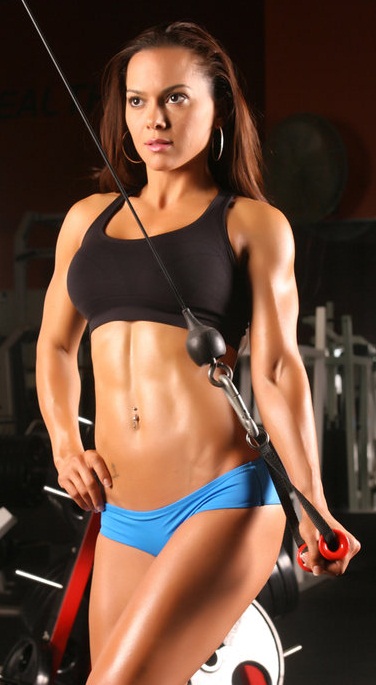 Except for those lucky few who already have too much of a good thing, bodybuilders don’t neglect biceps or pecs. On the other hand, from raw neophytes to those doing their thousandth workout, too many bodybuilders neglect cardio, stretching and abs none of which provide the pleasing pump of dumbbell curls or bench presses and they may not allow any room in their routines for smaller bodyparts, such as forearms. You’re likely unaware that you’re shortchanging some crucial bodybuilding components and therefore shortchanging your overall progress.
Solutions
- Sweat the “small stuff.” Make time and space in your routine for abdominals, calves, forearms, lower back and traps. In fact, abs and calves can be trained more frequently than other bodyparts. Likewise, always schedule time for cardio, instead of relegating it to “if I have time” status.
- Give every bodypart its own routine. Instead of a “leg routine,” have a “quad routine” and a “ham routine” and a “calf routine,” even if one follows the other in the same workout. Similarly, give your traps their own routine instead of merely lumping them in with shoulders or back.
Find a way to work in muscles you might otherwise avoid, such as abs. You can do this by performing sets of abs between those for another bodypart, such as shoulders.
Mistake #3 Missing the Target
Abs, back, quads, triceps and traps those are five bodyparts where, over the course of our classes, we discussed missing the targeted areas with exercise selection and performance. What do they have in common? They’re all complex bodyparts with a variety of areas to hit and thus a variety of areas to miss. Too many bodybuilders think they’re hitting, say, their lower lats or outer quads while in fact they’re whiffing over and over again.
Solutions
- Know your anatomy. For example, the deltoids and triceps both have three heads. You need to know where those heads are before you can then target each one.
- Learn how to hit the target. Sometimes the best exercise may surprise you, but trust us to give you the proven formulas as well as the latest scientific research, so you’ll know precisely how to nail every target.
Do your target practice. It’s up to you focus the most stress on the muscles and areas of muscles you want to grow to attain a complete physique.
Photo Credit: Jason Ellis Photography
Mistake #2 Short and Quick
It’s easiest to stay in the midrange of reps and avoid stretches and contractions, and that’s why bodybuilders work the middle on set after set. Consequently, they also minimize their gains. This can and does occur with any bodypart, but it’s especially prevalent on leg day. Too many bodybuilders go too short and quick on reps of squats, leg presses and standing calf raises. This allows you to move more metal, but not motivate more muscle. The key to growth is stressing your muscles through full ranges of motion.
Solutions
- Learn the proper range of motion, and use a weight that allows you to get at least eight full-range reps.
- During reps, forget the weight and instead focus on feeling your muscles contracting.
- You may wish to extend some sets via burns (quick partial reps), but do this only after reaching failure with full-range reps.
Mistake #1 Same Old Workout Syndrome
The most common training mistake is sticking to the same routine long after it’s outlived its
usefulness. For some, it’s a lack of imagination that keeps them doing the same basics in the same order. For others, a kind of inertia takes over, so they robotically do the same exercises for the same reps with the same weights, giving their muscles no new stress to adapt to. If you’re making continuous strength gains on a routine, you can stick with it. If you’re not, change it now.
Solutions
- As with our number three mistake, sometimes the problem is a lack of knowledge. Learn all the exercises you can do for each bodypart. You may be surprised by all the variations to even limited movements like shrugs and wrist curls.
- Try the various machines in your gym. Sometimes just subtle differences in things like the placement of pulleys and hinges can make a big difference in how two similar machines work your muscles.
It’s not just exercise selection you can alter. Other variables include the number of sets per exercise, the number of reps per set, exercise order and the workout order of your training split.
Lessons Learned
- Schedule at least 72 hours of rest between working bodyparts.
- Make time for your smaller bodyparts, and schedule each into its own routine instead of lumping it in with others.
- Learn your muscle anatomy and how to focus exercises on specific areas.
- Learn the proper range of motion, and use a weight that allows you to get at least eight full-range reps.
- Embrace variety and regularly alter the variables of your routines.

 as well as which ones you take is a rather serious matter. As such,
you should learn about the potential benefits and also the risks associated
with their intake beforehand. You should shortlist your products of interest
and head straight over to your healthcare specialist to ask for their advice on
the matter.